Friday, April 15, 2016

A friendly cashier and shidare-zakura

At a certain supermarket on the edge of Tokyo's Toshima ward, there works an especially friendly cashier. While other cashiers may balk at the sight of foreigners, this one doesn't: she always greets us with a smile and a hearty こんばんはー!(konbanwa! - good evening!), and lets us try out our rudimentary Japanese with her as she practices her (admittedly far more proficient) English with us. This friendly cashier is the one who hooked me up with my very first point card in Japan--a bit of a slippery slope!--and continues to give us helpful advice and tips.

It's April now, so many varieties of cherry blossoms have already fallen and given way to green leaves, but I still find myself thinking about March's beautiful blossoms. Last month, we saw some of the most unique blooms yet thanks to that cashier's advice: go to Komagome Station and visit Rikugien Garden
. What I was expecting was what I had seen at places like Ueno Park: the Somei-yoshino (染井吉野「ソメイヨシノ」) cherry, the most widespread variety in Japan. (See one of my old Photo Friday posts about it here!) What we found at Rikugien was something markedly different...breathtaking, even, for nature lovers like me.


A panoramic photo my husband took of the largest weeping cherry tree at Rikugien
I didn't realize it before visiting, but Rikugien is known for its shidare-zakura (枝垂桜 「シダレザクラ」), or weeping cherry trees. There are a handful of these trees there, but the one pictured above is the largest (and the most popular, as evidenced by the crowd seen in the photo).

Another one of my husband's photos showing a closeup of one of the branches. He wasn't afraid to step through the crowds for a quick picture...something more timid folks (like me) are a little hesitant to do!
Constructed in 1702 by Yanagisawa Yoshiyasu, daimyo of the Kawagoe domain, the layout of Rikugien (六義園) was inspired by waka poetry. Today, Rikugien is appreciated as a typical example of an Edo period garden. During sakura season--roughly late March through early April--nightly illuminations are held until 9 p.m., featuring a gorgeous view of the sakura after dark. The people of the Edo period would have loved this modern-day take on hanami, and it's well worth the admission fee.

One of my photos of the weeping cherry
Yesterday we went back to the grocery store and chatted with that friendly cashier. We hadn't seen her since we had been away on a vacation outside of Tokyo. We told her we had taken her advice and visited Rikugien, and showed her our photos of the weeping cherry trees. 良かった!, she said with a laugh, giddy that we took her advice. In English, she told us that she had been waiting for us to return.

It's exchanges with everyday people like this that I'll miss when I return to America. True, we've made friends with people at places we frequent in the U.S. (Nina, Emi, and Chelsea at our favorite Japanese restaurant; Michael at the winery; Dave at the grocery store), but there's something different about making connections with people outside of one's home country. It makes the world feel smaller, somehow. When people say that Tokyoites are too busy for small talk or have no interest in chatting with foreigners, I think of the exchanges I've had with people--especially with my favorite cashier--and try to explain that that's not always the case. Japanese people can indeed be intimidated by foreigners, sometimes because they feel as though their English is not up to par. However, if you appear friendly and approachable, you might be surprised by the connections you make.

If you'd like to visit Rikugien Garden in Bunkyo-ku, it's is a short walk south of Komagome Station, accessible from the Yamanote Line and the Tokyo Metro Namboku Line. The standard entrance fee to the garden is ¥300 for adults.

Thursday, March 3, 2016

Emoji 101: Let's celebrate Hina Matsuri 🎎

March 3 in Japan is Hina Matsuri-- 雛祭り「ひなまつり」--the annual holiday honoring and celebrating girls. As with a handful of other special cultural occasions in Japan, it has its very own emoji!


The Hina Matsuri emoji, found in the "Objects" category on iPhones

Also known as "Girls' Day" or "Doll Festival" (the latter being the literal kanji translation), Hina Matsuri is celebrated in Japanese households and communities in varying degrees of complexity. For example, the "Big Hina Matsuri" in Katsuura, Tokushima takes the day to the extreme, with festivities marked by an incredible display of over 30,000 dolls! More modest celebrations may only include two hina ningyo dolls--the Emperor and Empress, as represented in the emoji seen above--although the iconic Hina Matsuri display includes the addition of several more dolls on a tiered display, representing members of the Heian Imperial Court. Small snacks like rice crackers are given as offerings to the dolls.

With its roots in the Heian period (794-1185), when dolls were displayed as a means to contain bad spirits--or were even floated down rivers with the same intent in mind, as seen in the ancient practice of nagashi-bina-- Hina Matsuri has a few different purposes in modern Japanese life. Families see the day as a time to pray for their daughters' health and happiness and view it as a step to womanhood, with hopes of future marriages in mind. But don't tarry on packing away the display for next year: a common belief is that if the dolls are left out on display too long, a daughter's chances at marriage may be delayed!


A Hina Matsuri display in the Pokemon world
with Pikachu as the Emperor and Clefairy as the Empress,

as seen in episode 52 of the anime
Much like other holidays in Japan and elsewhere, corporations have been quick to capitalize on Hina Matsuri. Beginning a few days ago, special Hina Matsuri cakes were available for special order from supermarkets (スーパー) and conbini (コンビニ, or convenience stores), offering a variety of designs ranging from more traditional strawberry cakes to on-trend Yokai Watch character cakes and everything in between; at my local supermarket, うれしいひなまつり ("Happy Hina Matsuri") played on repeat on the loudspeaker (give it a listen here!) as Hina Matsuri sweets and treats were offered for sale; and today, even Google Japan's Doodle featured the dolls. I can even remember an old Pokemon episode called "Princess vs. Princess" when Misty and Jessie competed in the "Princess Festival" for a set of must-have Pokemon dolls. (Note that the Japanese title of this episode was  げきとう!ポケモンひなまつり--or "Fierce fight! Pokemon Hina Matsuri"--so it's obvious that the Japanese writers intended for this so-called Princess Festival to be Kanto's own Hina Matsuri celebration, especially since it was celebrated annually on March 3. However, as with many Japanese imports, cultural nuances were lost in translation.)


Today's Google Doodle in Japan

So how is an American celebrating Hina Matsuri here in Tokyo's Toshima ward, other than by writing this blog post? Well, while the dolls are absolutely beautiful, I can't exactly afford to buy a set for myself--we saw a few displays for sale at the Toys R Us in Sunshine City, and they're pricey, to say the least. Within my financial grasp, however, are some delicious sweets and deals, as shown below!

Hina Matsuri displays at my local supermarket (L) and convenience store (R)
Gorgeous Hina Matsuri chirashizushi (L); nothing says "festival" like a party pack of discount natto maki! (R)


My favorite Hina Matsuri treat might be these ベビーアンドーナツ, or "baby an donuts"--basically dense, sweet donut holes filled with red bean paste
My first exposure to Hina Matsuri was at my best friend's house when I was 8 years old. She and her family had just moved to Indiana from Japan that previous summer. Toward the end of February, they set up a display that instantly enthralled my third grade self: beautiful, golden folding screens with lanterns hanging from them, with two ornate porcelain hina ningyo dolls sitting in front of them. I had never seen anything like it, although it would be a few years until I fully understood what it was.

Wherever in the world you are, why not get into the spirit of Hina Matsuri today? Add its emoji to one of your texts, snaps, or other messages, and imagine what life would have been like as a member of the Heian court! 🎎 

Wednesday, March 2, 2016

Coming up: the true meanings behind emoji

Recently used emoji from my Snapchat
A significant part of the industrialized world has access to smartphones, and a standard feature with those are hundreds of tiny, colorful icons used to convey thoughts and emotions. I'm talking, of course, about emoji, or 絵文字「えもじ」. A combination of the Japanese kanji for "picture" (e) and "character" (moji), Shigetaka Kurita initially developed them for use by NTT docomo's newest line of mobile phones in the late 1990s. When smartphones--most notably, Apple's iPhone--came to the West a few years later, the Japanese creation was introduced to a wider international audience, and the use of them spread like wildfire.

Much like its predecessor, the colon paired with a left or right parenthesis-- :( or :) --emoji can effectively express ideas and feelings without a single word needed. They're a true modern-day take on the idiom, "A picture is worth a thousand words."

Since Shigetaka's creation was inspired by Japanese manga and pictographs, the meanings behind some of the icons were inevitably lost in translation--or were given new meanings, as I've personally observed. In future blog posts, including one coming soon, I'll be taking a look at the original meanings behind different emoji in the context of Japanese culture, history, and daily life.

So, how about you? Do you use emoji often? What's your favorite?

Sunday, February 28, 2016

Leap Day in Japan: the realm of yokai?

Right now, it's February 29 in Japan--Leap Day, or 閏日「うるうび」--that strange inbetween day that only appears on calendars once every four years. Leap Day is a unique date that exists in the realms of both reality and fiction. If you're born on Leap Day, for example, how do you celebrate your birthday on non-leap years?  I have an aunt who was born on Leap Day, and we like to joke that she's only a teenager since her actual birthday only comes around every four years.
関口文京区 : Sekiguchi, Bunkyo-ku
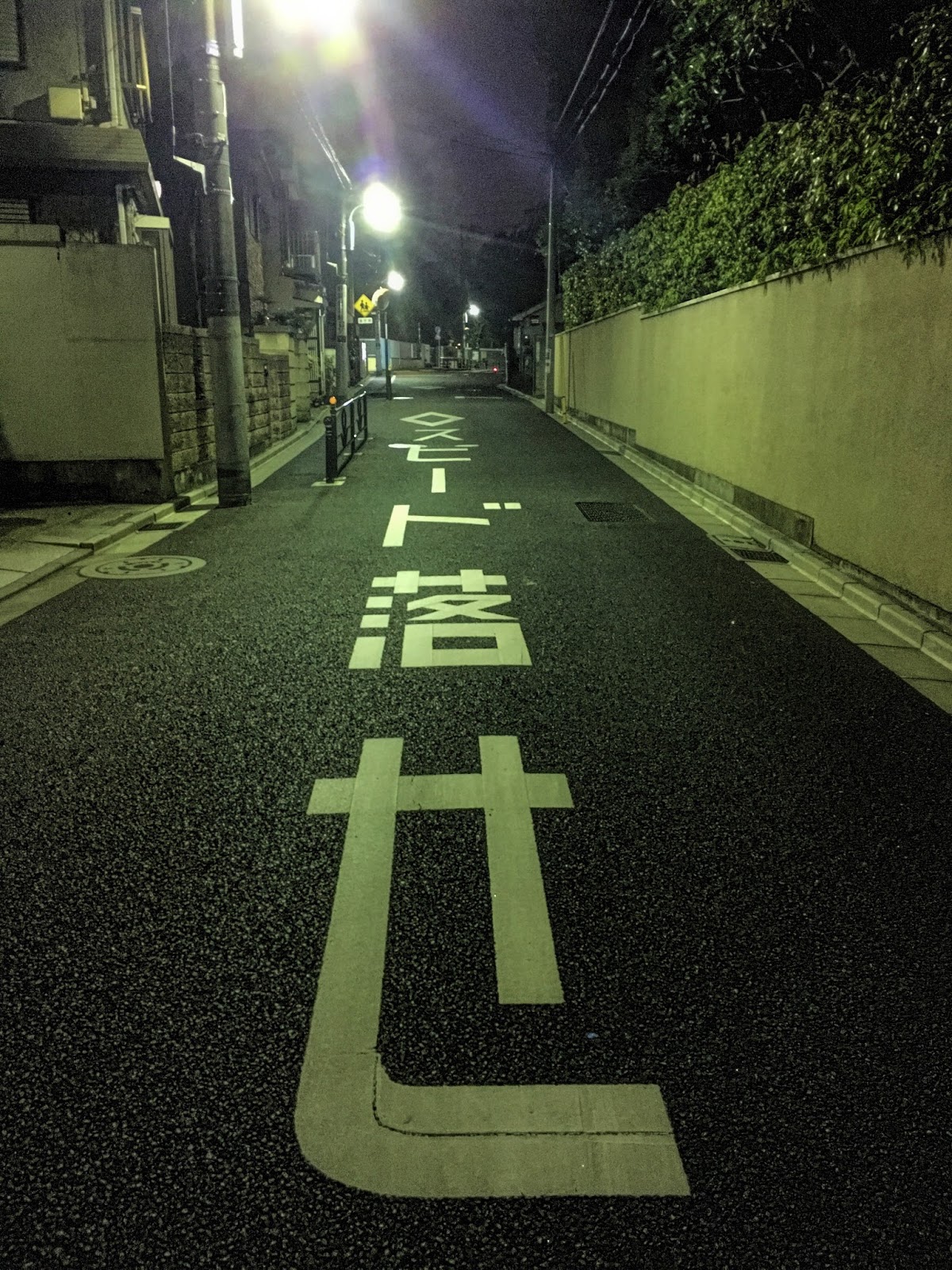
A quiet back road near Mejiro-Dori in Tokyo,
a place where I imagine yokai to dwell

So what does Leap Day in Japan have to do with yokai? First, a quick primer for those new to the term: yokai (妖怪「ようかい」--also stylized as yōkai or youkai) are creatures of Japanese myth and legend, with an oral and written history stretching back for centuries. Only recently have yokai entered the Western public eye with such pop culture hits as Yo-Kai Watchalthough other Japanese imports, including Pokemon, draw heavily from the urban legends and folktales.


As Michael Dylan Foster explains in The Book of Yōkai, yokai inhabit a sort of grey area between the real world and the unknown. Places like overpasses and intersections--figurative and literal bridges to other places--are prime spots for yokai to take up residence. While the West may view October 31 as the calendar date most associated with paranormal activity, I'd argue that February 29 is the true apex of the unexplained. Why, even in the Western world, Leap Day was historically viewed as a topsy-turvy "opposite" day of sorts, when women were permitted to propose to men (gasp!).


As you go about your business today, wherever in the world you may be, keep an eye out for strange happenings. With its existence both in the domains of tangible and intangible, Leap Day truly is an auspicious day for the unfamiliar and mysterious!

Tuesday, December 1, 2015

First look: Nintendo Account

Thanks for registering, merimo-chan!
The big gamer news today? Nintendo Account is live! (In Japan.) Nintendo Account is designed to replace Club Nintendo, the company’s long-running loyalty program. A new reward system will be put into place where you can earn points through various methods and exchange them for digital and physical goodies, and data will be backed up via cloud storage for transmission between consoles, computers, and smartphones. Nintendo's new next-gen console in the works, currently named the Nintendo NX (note that its name could change...remember when the Wii was known as the Revolution?), is rumored to offer play both at home and on-the-go, and considering Nintendo's upcoming entry into the smartphone gaming market with Miitomo, cloud storage coupled with inter-device play only makes sense.

Nintendo has been a part of my life since third grade, when I got my first gaming console: the Super Nintendo Entertainment System. Since then, I've enjoyed countless hours of platformers, racing games, fighting games, and RPGs on various Nintendo consoles. When I was in Japan this past winter, I bought a New Nintendo 3DS before it was out in the States. Today, I signed up for Nintendo Account with my existing Japanese Nintendo Network ID connected to my New 3DS and took a look at the new site. Since I registered before February 1, I’ll get 100 yen back on every 1000 yen I spend in the eShop–a nice little perk–and I’m looking forward to seeing what my personalized deals will be. 

Nintendo Account will no doubt be coming soon to North America, but until then, here’s a peek at what the main account page looks like!
My Nintendo Account...um, account

Thursday, August 6, 2015

Remembering Hiroshima: 70 years later

On a grey winter's morning, just a couple of days after Christmas, our latest tour of Japan took us to Hiroshima. Hiroshima was completely out of the way, far from most of our familiar Kanto-area haunts--although it did give us an excuse to visit nearby Itsukushima Shrine and Miyajima Island--but something drew me to the city. Hiroshima is an important part of 20th century world history, not only for Japanese but Americans as well; given the chance, I knew I had to visit and see it for myself.

On August 6, 1945--70 years ago today--the U.S. dropped the first of two atomic bombs on Japan, with the second dropped on Nagasaki on August 9. The first bomb was detonated around 600 meters (or, a little more than a third of a mile) midair above Shima Hospital, not far from the Hiroshima Prefecture Industrial Promotion Hall.

原爆ドーム: Genbaku Dome, also known as the A-Bomb Dome or Hiroshima Peace Memorial
The Industrial Promotion Hall, now commonly known as the A-Bomb Dome, was the only structure in the area still standing after the bomb blast, and today can be seen as it appeared in the aftermath of the explosion. The scaffolding surrounding the structure, as seen above, is temporary: maintenance is held every few years to keep what's left of the building standing. Rather than repairing and restoring the building to its former state, officials felt it important to keep the ruins preserved so that people today may still observe the effects of the bomb. It is now a UNESCO World Heritage Site.

As the plaque in front of the A-Bomb Dome explains, over 200,000 people were killed by the bomb's blast and fires, and a 2 kilometer (roughly 1.25 mile) radius of the city area was reduced to ash. The plaque doesn't mention the thousands more who were injured or who struggled with long-lasting aftereffects of exposure to the radiation. As someone who has never witnessed war firsthand on her home turf and who doesn't come from a military family, it can be convenient for me to think about wartime casualties only in terms of soldiers on the front lines--soldiers who take up their country's cause, knowingly putting their lives on the line to fight for their beliefs and way of life. But in Hiroshima, as during other wars, many of the wartime casualties were civilians going about their daily lives on that August morning. Prior to the bomb dropping, Hiroshima's population numbered about 350,000. To lose half of a city's population in a single attack is almost unfathomable.

The view of the A-Bomb Dome from across the Motoyasu River
As we walked through the Peace Park, we met one of the survivors of the bombing, a group of people referred to in Japanese as hibakusha (被爆者, literally "explosion-affected people"). She spends many of her days in the park talking to visitors and collecting signatures for her petition calling for a worldwide nuclear weapons ban. When she saw that we listed our home country as the United States, she excitedly said, "Oh, Americans!" and offered us cranes she had folded, thanking us in earnest for visiting the city and the park. Naturally, I was crying--as I still do when I think about our visit to the Peace Park--and she did her best to cheer me up, and made me smile. She was genuinely glad to have met us, and we her.

Visiting the Peace Park as an American was an emotional and difficult thing to do. Although neither I nor my family had no direct hand in the horrors that Hiroshima endured, I still felt a tremendous amount of guilt. I know some older Americans who still harbor negative feelings toward the Japanese (as well as some not-so-old ones), so I felt that we would be met with at least a little animosity when people found out we were Americans--or at the very least would be distant toward us due to our obvious Western appearance. I was surprised and comforted to learn that the opposite was true. A tenacious, uplifting spirit permeates the city, and its citizens are warm and welcoming.

A look at Hiroshima today from near Hiroshima Station
Today, Hiroshima is a thriving city of around one million people. They have a professional baseball team, the Hiroshima Toyo Carp (whose logo resembles my favorite MLB team's, so I had to buy a hat!), and they're known for their delicious Hiroshima-style okonomiyaki (leaps and bounds superior to Kansai-style okonomiyaki, in this humble foodie's opinion). 


平和の鐘: Bell of Peace
Although the city has rebuilt and recovered, many of the bomb survivors living in Hiroshima and elsewhere are still faced with daily struggles. Very few nursing homes exist solely to provide specialized care for hibakusha, and the waiting lists to live in such places are years long. In a recent survey conducted by NHK World, many hibakusha reported that they aren't able to share their wartime experiences with others, some citing apathy and disinterest among younger people. The harsh reality of the situation is that in a few decades, no one in the world will remember experiencing the events of World War II firsthand, and all we will have left are monuments, photos, videos, and survivors' stories. I hope that Japan--as well as the rest of the world--recognizes that the hibakusha and their stories are an important part of our modern world history, and takes steps to properly honor and care for them in their final years.

As a world citizen, you too can do your part: if you're ever in Japan, make sure to visit Hiroshima and the Peace Memorial. Give the Bell of Peace a ring, and let its low, soothing din resonate through you and to the far reaches of the park. Hiroshima is an important part of our world's cultural heritage, and the lessons learned there should never be forgotten. As it's inscribed on the plaque in front of the Peace Bell: "Let all nuclear arms and wars be gone, and the nations live in true peace!"

Friday, May 15, 2015

Photo Friday #9: Zenko-ji! フォト金曜日#9:善光寺!

フォト金曜日#9:善光寺!Photo Friday #9: Zenko-ji!

How about a little geography lesson? Japan is an archipelago, consisting of thousands of islands, but is typically portrayed as four main islands: Hokkaido, Honshu, Shikoku, and Kyushu, north to south. The country is further divided into eight regions consisting of 47 prefectures. For example, Kyoto is the capital city of Kyoto Prefecture, located in the Kansai region on the island of Honshu. Honshu--本州, meaning "main province"--is the largest, most populous island of Japan, making it a popular tourist destination.

In this week's Photo Friday post, we're taking a trip out of Tokyo Station on the Hokuriku Shinkansen, bound for Honshu's Chubu region. Sandwiched between the Kanto and Kansai regions (home to Tokyo and Kyoto, respectively), the Chubu region can sometimes be overlooked as tourists pass through to better known locales, but has a charm all its own. Our Chubu destination may sound familiar; we're heading for Nagano, the capital city of Nagano Prefecture, where we visited this Buddhist temple:


善光寺本堂: Zenko-ji Hondo (Zenko-ji Temple Main Hall) - January 4, 2015
If you're a modern-day tourist in Nagano, you're probably visiting with one main thing in mind: winter sports. Nagano is famous for hosting the 1998 Winter Olympics, and its mountainous terrain is perfect for skiing and snowboarding. Indeed, most of the tourists we saw in Nagano were hauling snowboards around with them, and I felt a little out of place without one. However, I still can't forget how painful it was to break my leg playing softball years ago, or how I lived in daily pain for five years following a back injury. Needless to say, I wasn't visiting Nagano for its outdoor sports. (When I saw an Australian girl in full winter gear on crutches in a Nagano convenience store, I immediately assumed her injury was sustained on the slopes, and my fears felt validated.)

When I was researching where we should go during our second trip to Japan--somewhere other than Tokyo and Kyoto--my friend Miho mentioned Nagano. Miho grew up there and went to school near Zenko-ji Temple. The more I read about the area, the more I wanted to visit and see its scenic vistas for myself. It was only an hour and a half out of Tokyo on the shinkansen, plus its cooler temperatures offered the bonus of potentially getting to see snow fall. We added it to our itinerary and arrived on Saturday, January 3.

After having our Sunday breakfast at the Mister Donut near Nagano Station, we headed for Zenko-ji Temple. It's about 2.2 kilometers, or just under 1.5 miles, from the train station to the temple, and as you approach Zenko-ji the road becomes a little steep. (Note that it's a shorter walk to the temple from Zenkojishita Station, but we enjoyed walking and seeing the city.) As it was early January when we visited, many people were presumably still doing hatsumode (the first shrine visit of the new year), so it was a little crowded. However, something struck me as strange as we got closer to the temple: we were the only Caucasian people in sight.

Japan is known for being a homogeneous country, but we saw handfuls of tourists and expats here and there: we met some Australians at Fushimi Inari Taisha, Germans at Tokyo Station, Americans at Roppongi Hills and Kabukicho, British at a pub in Shibuya, and so on. Even our hotel at Nagano was home base for several Australians eager to hit the slopes. But for some reason, Zenko-ji didn't seem to be a destination for other non-Asian foreigners, and we suddenly found ourselves the objects of a lot of attention.


Just some guy with a blonde in a Carp hat.
A group of high school girls approached us and waved, shyly saying "hello" to us; I said "hello" back, and they all giggled ferociously. An old Japanese man greeted us, asking where we were from; he shook our hands, thanking us for coming to Nagano and the temple. I was used to people staring at me in Japan--there aren't many tall, platinum blondes there!--but I was surprised by how amicably we were treated at Zenko-ji. Although Japanese people were usually friendly to us, nowhere else in Japan did so many random passersby make such a genuine, unsolicited attempt to make us feel welcome. It really left an impression on me. It could have felt awkward to be the only non-Asian tourists in sight, but the locals' warm demeanor put me at ease and really allowed me to enjoy strolling the temple grounds.

I wanted to visit Zenko-ji in part because of its rich history. Built in the 7th century, it predates many of Japan's sects of Buddhism, and thus is managed by two different schools--Tendai and Jodo-shu. Like many other temples (remember Kinkaku-ji?), it enshrines images of the Amida Buddha, but what makes it unique is that it houses what's believed to be the first statue of Buddha ever brought to Japan during the 6th century. To say this relic is sacred is a bit of an understatement: it's so revered that even the highest ranking priests at Zenko-ji are forbidden from seeing it, and has been hidden since 654! Every seven years, a treasured replica of the statue--with the replica itself dating back to the Kamakura Period (1185-1333)--is put on public display for a few weeks during Gokaicho, drawing pilgrims and visitors by the thousands. If you're lucky enough to be in Japan right now, you actually have until the end of May to see the Maedachi Honzon statue in person! (The rest of us can watch this video from a few years ago documenting Zenko-ji, the Gokaicho ceremony, and the preparations leading up to it.)

Zenko-ji's other attractions include the Rokujizo, statues of the six Bodhisattvas, as well as an interesting representation of the "key to paradise" of the Amida Buddha. Hanging on a wall in a pitch black, narrow basement corridor, it's said that devotees who manage to touch this metal key can gain enlightenment. Hungry pilgrims can also enjoy various treats from the food stalls lining the road to Zenko-ji. Seeing these vendors is commonplace at larger shrines and temples in Japan, but I especially enjoyed the regional (and vegetarian!) specialties available near Zenko-ji: piping hot oyaki dumplings and gohei mochi.

Centuries ago, it wasn't uncommon for Japanese cities to grow around castles, but Nagano grew around Zenko-ji. With its great "locals only" feel and ancient traditions, a visit to Zenko-ji should be included on every Nagano tourist's itinerary. As Nagano is surrounded by the Japanese Alps and offers tons of fun winter activities, it's easy to overlook the temple--particularly if you're suffering from temple burnout--but the city simply wouldn't exist without Zenko-ji. I know I'm looking forward to returning to the temple, someday!