Showing posts with label tokyo. Show all posts

Friday, April 15, 2016

A friendly cashier and shidare-zakura

At a certain supermarket on the edge of Tokyo's Toshima ward, there works an especially friendly cashier. While other cashiers may balk at the sight of foreigners, this one doesn't: she always greets us with a smile and a hearty こんばんはー!(konbanwa! - good evening!), and lets us try out our rudimentary Japanese with her as she practices her (admittedly far more proficient) English with us. This friendly cashier is the one who hooked me up with my very first point card in Japan--a bit of a slippery slope!--and continues to give us helpful advice and tips.

It's April now, so many varieties of cherry blossoms have already fallen and given way to green leaves, but I still find myself thinking about March's beautiful blossoms. Last month, we saw some of the most unique blooms yet thanks to that cashier's advice: go to Komagome Station and visit Rikugien Garden
. What I was expecting was what I had seen at places like Ueno Park: the Somei-yoshino (染井吉野「ソメイヨシノ」) cherry, the most widespread variety in Japan. (See one of my old Photo Friday posts about it here!) What we found at Rikugien was something markedly different...breathtaking, even, for nature lovers like me.


A panoramic photo my husband took of the largest weeping cherry tree at Rikugien
I didn't realize it before visiting, but Rikugien is known for its shidare-zakura (枝垂桜 「シダレザクラ」), or weeping cherry trees. There are a handful of these trees there, but the one pictured above is the largest (and the most popular, as evidenced by the crowd seen in the photo).

Another one of my husband's photos showing a closeup of one of the branches. He wasn't afraid to step through the crowds for a quick picture...something more timid folks (like me) are a little hesitant to do!
Constructed in 1702 by Yanagisawa Yoshiyasu, daimyo of the Kawagoe domain, the layout of Rikugien (六義園) was inspired by waka poetry. Today, Rikugien is appreciated as a typical example of an Edo period garden. During sakura season--roughly late March through early April--nightly illuminations are held until 9 p.m., featuring a gorgeous view of the sakura after dark. The people of the Edo period would have loved this modern-day take on hanami, and it's well worth the admission fee.

One of my photos of the weeping cherry
Yesterday we went back to the grocery store and chatted with that friendly cashier. We hadn't seen her since we had been away on a vacation outside of Tokyo. We told her we had taken her advice and visited Rikugien, and showed her our photos of the weeping cherry trees. 良かった!, she said with a laugh, giddy that we took her advice. In English, she told us that she had been waiting for us to return.

It's exchanges with everyday people like this that I'll miss when I return to America. True, we've made friends with people at places we frequent in the U.S. (Nina, Emi, and Chelsea at our favorite Japanese restaurant; Michael at the winery; Dave at the grocery store), but there's something different about making connections with people outside of one's home country. It makes the world feel smaller, somehow. When people say that Tokyoites are too busy for small talk or have no interest in chatting with foreigners, I think of the exchanges I've had with people--especially with my favorite cashier--and try to explain that that's not always the case. Japanese people can indeed be intimidated by foreigners, sometimes because they feel as though their English is not up to par. However, if you appear friendly and approachable, you might be surprised by the connections you make.

If you'd like to visit Rikugien Garden in Bunkyo-ku, it's is a short walk south of Komagome Station, accessible from the Yamanote Line and the Tokyo Metro Namboku Line. The standard entrance fee to the garden is ¥300 for adults.

Sunday, February 28, 2016

Leap Day in Japan: the realm of yokai?

Right now, it's February 29 in Japan--Leap Day, or 閏日「うるうび」--that strange inbetween day that only appears on calendars once every four years. Leap Day is a unique date that exists in the realms of both reality and fiction. If you're born on Leap Day, for example, how do you celebrate your birthday on non-leap years?  I have an aunt who was born on Leap Day, and we like to joke that she's only a teenager since her actual birthday only comes around every four years.
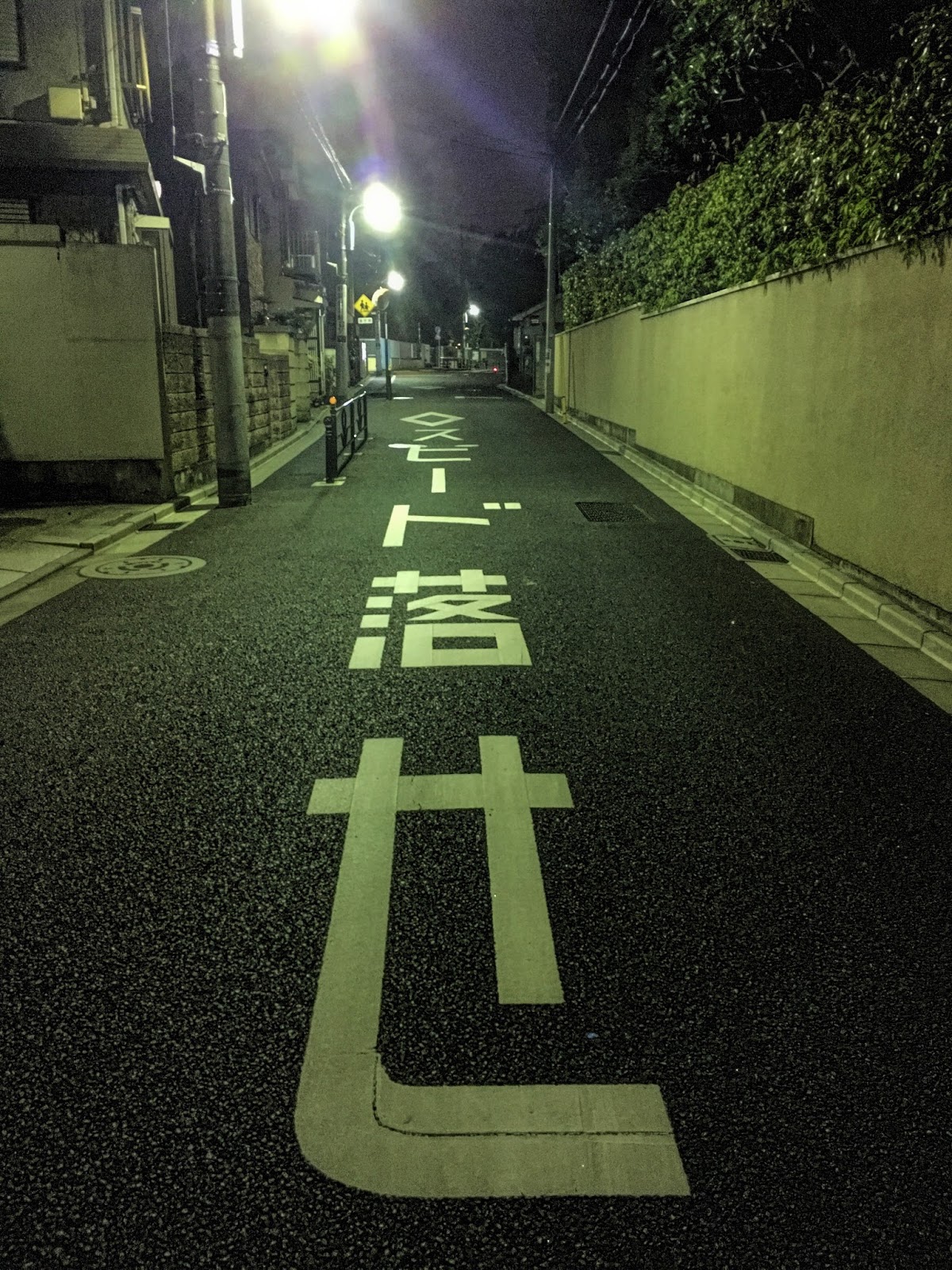
関口文京区 : Sekiguchi, Bunkyo-ku
A quiet back road near Mejiro-Dori in Tokyo,
a place where I imagine yokai to dwell

So what does Leap Day in Japan have to do with yokai? First, a quick primer for those new to the term: yokai (妖怪「ようかい」--also stylized as yōkai or youkai) are creatures of Japanese myth and legend, with an oral and written history stretching back for centuries. Only recently have yokai entered the Western public eye with such pop culture hits as Yo-Kai Watchalthough other Japanese imports, including Pokemon, draw heavily from the urban legends and folktales.


As Michael Dylan Foster explains in The Book of Yōkai, yokai inhabit a sort of grey area between the real world and the unknown. Places like overpasses and intersections--figurative and literal bridges to other places--are prime spots for yokai to take up residence. While the West may view October 31 as the calendar date most associated with paranormal activity, I'd argue that February 29 is the true apex of the unexplained. Why, even in the Western world, Leap Day was historically viewed as a topsy-turvy "opposite" day of sorts, when women were permitted to propose to men (gasp!).


As you go about your business today, wherever in the world you may be, keep an eye out for strange happenings. With its existence both in the domains of tangible and intangible, Leap Day truly is an auspicious day for the unfamiliar and mysterious!

Friday, May 1, 2015

Photo Friday #7: Harajuku shopping! フォト金曜日#7:原宿の買い物!

フォト金曜日#7:原宿の買い物!Photo Friday #7: Harajuku shopping!

Last week, I wrote about Chinzan-so Garden, the serene urban oasis in Tokyo's Bunkyo ward. When thinking of Japan's capital, however, one is probably more apt to picture things that better invoke visions of a bustling metropolis: packed commuter trains, heavy traffic, and rows of skyscrapers that seem to go on forever. For today's Photo Friday post, I'm sharing a view from the ground of one of Tokyo's countless streets--albeit one that isn't for cars:


竹下通り、原宿: Takeshita-dori (Takeshita Street), Harajuku - March 23, 2013
In keeping with Japan's retail culture, Takeshita-dori is one of Tokyo's pedestrian-only shopping streets. A short walk from Harajuku Station on the Yamanote Line, this area is where fashionistas come to play, spending their yen on everything from crepes to false eyelashes to selfie sticks. While Takeshita-dori lacks the polished, upscale aesthetic of Omotesando-dori, the popular neighboring road to the south, it and its many side streets form the true heart of Japanese street fashion and counterculture. It's gritty, it's crowded, it's noisy...it's effortlessly cool.

Bordered by the gorgeous green spaces of Meiji Jingu (or Meiji Shrine) and Yoyogi Park on its western edge, Harajuku's innumerable tiny shops on narrow alleys help fuel the rise of the hottest Japanese fashion trends. From decora to visual kei to sweet lolita, there's a little something for everyone. And if you're less into style and more into comfort (and cheekiness), you can still find an irreverent new T-shirt like I did, designed by Gokigen Factory.

In recent years, Harajuku has received a lot of attention, due in part to publicity from western entertainers. In her 2004 solo debut "Love. Angel. Music. Baby." Gwen Stefani heavily referenced Harajuku (though unfortunately mispronouncing it), drawing inspiration from its unique fashion scene. She co-wrote the song "Harajuku Girls" and hired four Japanese backup dancers--also known as the Harajuku Girls, going by the names Love, Angel, Music, and Baby--to appear with her in music videos, on tour, and in interviews. Even her fashion brands, particularly Harajuku Lovers, showcase her affection for the area.

Not surprisingly, Stefani's affinity for Harajuku is also shared by other pop songstresses. Lady Gaga always makes it a point to visit Dog--one of the many boutiques tucked away in basements--when she's in Tokyo; Nicki Minaj celebrates Harajuku's eclectic style with one of her alter egos; and just last week, Katy Perry was seen in the area wearing a fuzzy mask, akin to those made by gonoturn, with a schoolgirl outfit. (The article claims it was a "'look-at-me' ensemble," but honestly, it was pretty mild [dare I say...basic?] compared to most things seen every day in Harajuku.)

Western celebrities aren't the only ones highlighting Harajuku: from fashion blogger to model to singer, Kyary Pamyu Pamyu has evolved into an international superstar, casting a spotlight on Harajuku in the process. With viral hits like PONPONPON, her debut album, もしもし原宿 ("Moshi Moshi Harajuku"), came out in 2011; since then, she's released three more albums, and continues to work with Yasutaka Nakata (the producer of Japanese bands Capsule and Perfume). She's absolutely everywhere in Japan, appearing on variety shows, in magazines, and in commercials. I'm not ashamed to say that the decision to buy the New Nintendo 3DS while I was in Japan was strongly influenced by Kyary's Nintendo ads. かわいい だ よ!

In the 2009 video below, you'll see a 16-year-old Kyary ("Carrie" in the subtitles) on the streets in Harajuku...and then at home, quarreling with her mother about her fashion choices. After interviewing Kyary, the program profiles an American expat who fell in love with lolita fashion while stateside. And, bonus: five minutes in, you'll meet Minori, the most popular shironuri artist today. (Be sure to watch from 6:50 til the end for more Harajuku looks, too!)


With Shinjuku Station--the world's busiest train station--two stops to the north and Shibuya Station--a bishoujo/bishounen shopping mecca--one stop to the south on the Yamanote Line, Harajuku and Takeshita-dori may seem like a blip on the average tourist's radar. Sure, Harajuku Station is a little grungier than others, and the area holds the dubious honors of both being the only place I saw a rat in Japan (apparently rats love crepes too!) and the only place I felt threatened (ok, but let's keep it relative: it's still Japan, so the passing fear I felt on that random back street is still less than the fear I feel in my own U.S. neighborhood), but visiting Harajuku gives you a raw, firsthand look at the youthful undercurrent of modern Japanese society, far removed from anything you'll see in America.

...well, maybe you will see it in America, but it'll be five years from now--ten if you're here in the midwest--and Japan will have already cycled through a dozen new trends by then.

Friday, April 24, 2015

Photo Friday #6: Chinzan-so Garden! フォト金曜日#6:椿山荘!

フォト金曜日#6:椿山荘Photo Friday #6: Chinzan-so Garden!

In the past two Photo Friday posts, I contrasted old with new in Kyoto, showing that there's more to the nation's former capital than just temples and teahouses. But what of Tokyo? As I've mentioned in a past post featuring Ueno Park, Tokyo isn't just a concrete jungle: throughout the city are numerous green spaces and parks, and innumerable shrines can be found wedged between skyscrapers and houses. In this week's Photo Friday post, I take a look at another favorite urban oasis:


椿山荘: Chinzan-so Garden
I initially discovered Chinzan-so not because of its gardens, but because of its lodging. Prior to our first trip to Japan in March 2013, we (somewhat spontaneously) took advantage of a deal from Globotours we saw on LivingSocial. Included in the travel package was a round-trip flight from LAX to Narita with Singapore Airlines, plus a stay for a few nights at Hotel Chinzan-so Tokyo, which had just rebranded from a Four Seasons hotel to an independent hotel. As frugal people, we normally wouldn't get to experience something like this--we typically stick to budget airlines and lodging--so we jumped at the chance.

Located in the Sekiguchi area of Tokyo's Bunkyo ward, Chinzan-so and its surroundings--once known as Tsubaki-yama (椿やま), or Camellia Hill--have a rich history. 17th century haiku poet Basho lived nearby, no doubt drawing inspiration from the wild camellias and rolling hills. In the 19th century, ukiyo-e artist Ando Hiroshige featured the area in his series One Hundred Famous Views of Edo (名所江戸百景) in the April 1857 woodblock print Basho's Hermitage and Camellia Hill on the Kanda Aqueduct at Sekiguchi (せき口上水端はせを庵椿やま).


Hiroshige's depiction of Camellia Hill

Shortly after being featured in Hiroshige's work, Yamagata Aritomo--an Imperial Army Field Marshal and Japanese Prime Minister--bought the land in 1878, giving it the name Chinzan-so, or "House of Camellia." In addition to his military and political accomplishments, he enjoyed Japanese garden design as a hobby (otherwise seen at Murin-an in Kyoto), and so began shaping the land into the Chinzan-so we know today.

In 1918, Yamagata willed the land to Baron Fujita Heitaro, head of a construction company, who then began decorating the gardens with artifacts from across the nation, most notably a shrine and a three-story pagoda. The Shiratama Inari Shrine (白玉稲荷神社) was relocated in 1924 from Shimogamo-jinja in Kyoto (and is watched over by a Fushimi Inari Taisha deity!), and you can receive your fortune via omikuji (御神籤) from a coin-operated machine there. The pagoda Entsukaku (圓通閣), as seen in the photo above, was moved in 1925 from Chikurin-ji Temple in the mountains of Hiroshima; it was said to have been constructed without nails by Chikurin-ji monks either during the Heian (794-1185) or Muromachi (1338-1573) periods.


Other relics can be found throughout the gardens--stone lanterns, monuments, and more--which the hotel plots on maps both online and on hard copies for guests. With World War II came the destruction of much of the gardens, though the pagoda, shrine, and 500-year-old sacred tree were spared. Reconstruction on the gardens began in 1948, and upkeep on the grounds and its structures continues today.


As you can tell from the smattering of autumnal colors in the photo above, this picture wasn't taken during our first trip to Japan: we returned to the hotel and gardens for a night's stay in December 2014, as a treat during our honeymoon. It seemed appropriate, as Chinzan-so is not only famous for its gardens and hotel, but today also functions as one of Tokyo's most popular wedding sites, offering both Western and Shinto ceremonies. During both of our stays at the hotel, we caught glimpses of a few wedding ceremonies; they're so common that you can see a wedding party in the bottom right corner of the photo above!


Replete with historical artifacts--albeit relocated--the gardens' 17 acres are a picturesque haven from the hustle and bustle of Tokyo, and the opulent hotel offers elegant accommodations and an exceedingly friendly, hospitable staff. It's also relatively easy to access: it's a (somewhat steep) 10 minute walk from the nearby subway station, Tokyo Metro's Edogawabashi Station on the Yurakucho Line, or a (somewhat long) 30 minute walk from Mejiro Station on the Yamanote Line. (After a few of those 1.5 mile walks from Mejiro Station--on an unwittingly broken ankle, I might add--we wisened up and learned how to use the buses, a cheaper option than a ~¥750 t
axi ride.)

Taking a leisurely stroll through the gardens, walking under the waterfall, gazing at the serene pond...it's all a refreshing change of pace after experiencing sensory overload in places like Shinjuku and Shibuya. Indeed, aside from the skyscrapers looming in the background, it's easy to forget that you're still in the city. Just like there's more to Kyoto than just temples and teahouses, there's more to Tokyo than just concrete and neon.

Friday, March 27, 2015

Photo Friday #3: Ueno Park hanami! フォト金曜日#3:上野公園花見!

フォト金曜日#3:上野公園花見!Photo Friday #3: Ueno Park hanami! 

As I wrote in Wednesday's Mini Post, the sakura (cherry blossoms) have opened in Tokyo! This week's Photo Friday entry takes a look at what Ueno Park will look like in a few days, when the sakura reach their peak...


Geisha performing amidst Ueno Park's sakura, March 23, 2013
Though Ueno Park opened to the public in 1873, hanami (flower-viewing) is a centuries-old tradition, stretching back to Japan's Nara and Heian periods (794-1185) when the Japanese elite first enjoyed parties under blossoming ume (plum) and sakura trees. Since then, hanami and sakura have become an important part of Japanese history and pop culture, from inclusion in The Tale of Genji to seasonal drinks at Starbucks.

As you can see in the photo above, Ueno Park, Japan's most-visited public city park, is one of the most popular spots in Tokyo for hanami. Every year, millions of people come to Ueno Park and its surrounding areas to see thousands of cherry trees in bloom. Nearby Ueno Station and Keisei Ueno Station become flooded with visitors, slowly walking shoulder-to-shoulder as they make their way to the park.

Once at the park, visitors are treated to traditional dance and music under millions of blooms, with picnickers enjoying delicious bento, sake, and beer on tarps or tatami mats. In the photo above, onlookers enjoy a performance by geisha, a rare treat in modern Japanese society. (Contrary to how Japan is sometimes portrayed, geisha aren't a common sight. During this trip, I briefly saw one on a Kyoto side street, presumably making her way to an appointment.)

I like this photo because it shows that foreign tourists aren't the only people fascinated by geisha; the entertainers are a bit of a dying breed, as fewer girls enter the profession in these modern times. Catching a glimpse of such a quintessentially Japanese sight, framed by sakura, was truly moving--and definitely worth missing our flight back to the U.S.

Wednesday, March 25, 2015

Mini Post: Tokyo sakura! ミニポスト:東京桜!

ミニポスト:東京桜!Mini Post: Tokyo sakura!

Oh, to be in Japan right now: the sakura, or cherry blossoms, have opened in Tokyo! Nothing heralds the arrival of spring in Japan quite like sakura in bloom.

According to japan-guide.com's Tokyo Report, the cherry blossoms in Ueno Park have just opened and are expected to be in full bloom by early next week. No doubt the hype surrounding hanami (flower-viewing) parties is building; in just a few days, Ueno Park will look something like this...


上野公園花見Ueno Park hanami, March 23, 2013
Predicting when the sakura will bloom is something Japan takes very seriously, as the iconic flowers are not only culturally significant--among other things, they represent the beautiful, fleeting nature of life--but are also important for tourism and the economy. (Case in point: during my first trip to Japan, we missed our flight back to the U.S. because we were stuck in traffic after viewing the cherry blossoms in a very congested Ueno Park, which had been practically empty just a few days prior.)

Every year, organizations like the Japan Weather Association publish their sakura forecasts for cities throughout Japan, basing their predictions on weather trends while also considering past years' results. This year, the blossoms have opened slightly earlier than average--Tokyo's representative tree at Yasukuni Shrine began blooming on March 21--but during our 2013 trip, they set the record for the earliest opening since record-keeping began in 1953.

As with plants and flowers in the U.S., southern areas' warmer climates produce the country's first blooms as early as January (Okinawa), and northern areas' cooler temperatures delay the opening as late as May (Hokkaido).

This has been a Mini Post, a chibi-sized version of a regular meauxtaku post. You may now return to your regularly scheduled internet.

Tuesday, March 17, 2015

Johto Memories: Happy Anniversary, HG/SS! おめでとう!

Flashback to five years ago, this past weekend: the newly remastered second generation Pokémon games, HeartGold and SoulSilver (HG/SS), hits North American stores. Pokéfans of all ages spend countless hours exploring the Johto region on the Nintendo DS, with some experiencing it for the very first time, and others enjoying a bit of nostalgia from 10 years past. Most notably, however, wasn't necessarily the improved graphics or the addition of the DS' touchscreen and stylus to gameplay; it was the inclusion of a pedometer sold with the game that truly took the game to the next level.


Taking my Poliwhirl out for a (very long) stroll along Tokyo's Kappabashi-dori
Known as a Pokéwalker, this pedometer wasn't the first virtual Poké-pet. The Pokémon Pikachu was released in the late 1990s as a standalone toy amid the virtual pet craze à la Tamagotchi, and the Pokémon Pikachu 2 GS followed soon after, featuring infrared communication with that era's current Pokémon games of Gold, Silver, and Crystal. Trainers looking to receive Mystery Gifts from their Pikachu 2 GS had to make a separate purchase; unlike the Pokéwalker and HG/SS, the GS did not come bundled with the games.

The integration of the Pokéwalker with HG/SS put the nostalgia off the charts for me, and was one of my favorite features of the game. As an adult, it not only hearkened back to my childhood days of wishing Pokémon were real (well, I still wish that!), but it also encouraged me to be more active. As you can see in the picture above, it wasn't difficult for me to rack up thousands of steps per day in places like Tokyo...but in my Indiana city, where foot traffic isn't as common, practical, or safe, it became a challenge: can I break 10,000 steps a day? 15,000? 20,000? Ultimately, that gamer mentality of "leveling up" helped push me toward a healthier lifestyle.

Of course, due to the Pokéwalker's small size and slippery case, many a soul stored within became lost: whether met with the watery grave of the washing machine, or stealthily jumping out of pockets in pursuit of freedom, many of us mourned the loss of our beloved virtual pets. Through several strokes of luck, I still have mine: not only did an especially tenacious Furret survive a trip through the wash (Furret used Surf!), he made it through what I mistakenly thought was a permanent separation at the San Antonio airport, instead spending a few months hiding out under the driver's seat of my car. Nowadays, my Pokéwalker and my Pikachu 2 GS spend most of their days in relative safety on my dresser, not because I've forsaken my active lifestyle--but because I'm terrified of losing such nostalgic relics.

Do you still have your Pokéwalker, or Pokémon Pikachu? Comment here and share your adventures! Also, don't forget to check out some of my favorite Johto-inspired designs, currently on sale in my Teepublic shop!

Friday, March 13, 2015

Photo Friday! フォト金曜日!(ノ^▽^)ノ*:・゚✧

フォト金曜日!Photo Friday!

Every Friday here at meauxtaku.com, I'm going to be posting a picture I took in Japan. I'm not a professional photographer by any means--I took them with my iPhone!--but I hope my pictures will help bring my stories and experiences to life. I'm particularly excited about this week's photo, as I took it two years ago today (!) during my first visit to Japan. This being the inaugural Photo Friday, it seemed appropriate to choose an extra touristy one; indeed, this famous landmark was one of the first places I visited in Tokyo:


東京タワー : Tokyo Tower
This is a picture I took of Tokyo Tower, one of many Japanese tributes to France and its culture. Open since 1958, it has also become an icon of Japanese culture in its own right: Tokyo Tower has its own mascots (Conehead-esque brothers named Noppon); its own emoji (no, that's not a red and white Eiffel Tower on your phone!); and has appeared in countless anime, manga, TV shows, and movies. Located in Tokyo's Shiba-koen district in Minato, it's used to broadcast radio and TV signals, and also offers breathtaking vistas of the sprawling city below. On a clear day, Mount Fuji (roughly 135 kilometers, or 80 miles away) can be seen from the tower's observation decks. Under the tower is Foot Town, a department store of sorts--after all, it wouldn't be Tokyo without shopping!--offering souvenir shops, restaurants and cafes, a convenience store, an aquarium, an amusement park, and other tourist attractions.

Admittance to the upper reaches of the tower is granted upon paying an entrance fee to access the level of one's choice: at the time of writing, adult fees are 900 yen for the Main Observatory, 150 meters high; 700 yen for the Special Observatory, 250 meters high; or 1,600 yen for both levels. Speedy elevators are available, but ambitious visitors can choose to climb more than 600 steps from Foot Town's roof to reach the Main Observatory.

For tourists unafraid of heights, Lookdown Window is located on the Main Observatory's first floor, and it's exactly what it sounds like: it's a pane of glass laid in the floor, offering a view of the ground from around 48 stories up. (I wasn't brave enough to stand on it, but that's actually encouraged; Tokyo Tower's own website even dares you to "jump as high as you can" on it. Pass!) If the thrill of Lookdown Window is a little too much for you, find peace on the second floor of the Main Observatory; it houses the Great Shinto Shrine of the Tower, the "tallest" shrine in Tokyo, where people come to pray for success with love and school.

At night, Tokyo Tower is certainly hard to miss: not only is it the second highest structure in Tokyo (surpassed only by the newer communications tower, Tokyo Skytree, in Sumida), but depending on the month, holiday, or season, it's illuminated with a variety of lighting effects. While walking from our Tamachi hotel to midnight mass at St. Alban's Episcopal Church in Minato this past Christmas Eve, we were treated to a gorgeous view of the tower lit in whites, blues, and reds with a heart icon on the side of the observation deck; a few days later, we got to see "2015" illuminated on the tower in honor of the new year.

Is it a tourist trap? Well, yes, a bit. But visiting Tokyo Tower should be one of your first stops in Tokyo--not just because it's a famous sightseeing spot, but because it's a great introduction to Japanese culture. Seeing the city from such a high vantage point helps you appreciate just how huge Tokyo really is, making you realize that you're not in Kansas Indiana anymore.